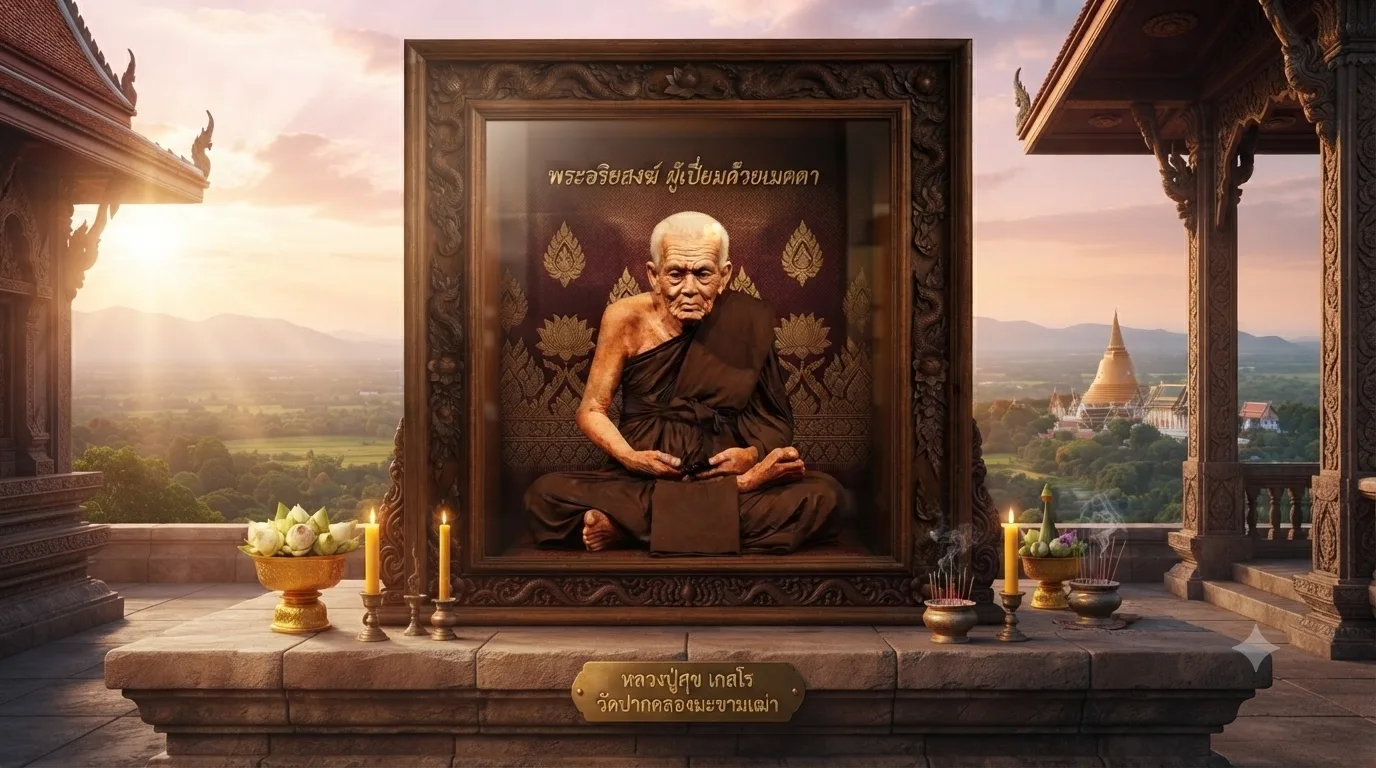
Introduction
Few Buddhist monks have left as profound an impact on Thai spiritual culture as Luang Phor Thuad, also known as Luang Pu Thuad. Although he lived during the Ayutthaya period in the 16th and 17th centuries, his influence remains stronger than ever. His life is intertwined with stories of wisdom, compassion, miraculous events, and unwavering devotion to the Buddha's teachings.
While Luang Phor Thuad himself lived centuries before Wat Chang Hai Rat Buranaram became famous, the temple has become the principal center for his veneration because it enshrines his relics and became the birthplace of the modern Luang Phor Thuad amulet tradition under Phra Ajahn Tim Dhammatharo, whose 1954 (B.E. 2497) amulets helped make Luang Phor Thuad known worldwide.
Early Life
According to traditional accounts, Luang Phor Thuad was born in 1582 (B.E. 2125) in what is now Songkhla Province, southern Thailand. His childhood name was Pu, and from an early age he displayed exceptional intelligence and spiritual qualities.
Many legends describe miraculous events surrounding his childhood, leading villagers to believe he possessed extraordinary merit accumulated through previous lifetimes. These stories have become an important part of Thai Buddhist folklore and continue to inspire devotees today.
Ordination and Buddhist Studies
As a young novice, Luang Phor Thuad devoted himself to studying Buddhist scriptures, meditation, and monastic discipline.
Recognizing his remarkable abilities, senior monks encouraged him to continue his education. He later received full ordination and became known for his deep understanding of the Dhamma, humility, and compassionate nature.
Historical traditions state that he later served in Ayutthaya and earned high ecclesiastical recognition because of his scholarship and spiritual accomplishments.
The Miracle of Seawater Becoming Fresh
The most famous story associated with Luang Phor Thuad tells of a voyage during which the ship carrying him ran out of fresh drinking water.
As the crew suffered from thirst, Luang Phor Thuad placed his foot into the sea and instructed them to draw water from that location. To everyone's amazement, the seawater became fresh and drinkable.
This miracle gave rise to one of his most enduring titles:
"The Monk Who Turned Seawater into Fresh Water."
For many Buddhists, this story symbolizes compassion, wisdom, and the transformative power of faith rather than merely a supernatural event.
Connection with Wat Chang Hai
Today, Wat Chang Hai Rat Buranaram in Pattani Province is inseparably linked with Luang Phor Thuad.
Although he lived centuries earlier, the temple preserves his legacy through sacred relics and annual ceremonies. During the mid-20th century, the temple's abbot, Phra Ajahn Tim Dhammatharo, restored the temple and created the first modern Luang Phor Thuad amulets to raise funds for renovation. These amulets quickly gained an extraordinary reputation and remain among Thailand's most valuable and respected sacred amulets.
The Famous Luang Phor Thuad Amulets
Among Thai amulet collectors, Luang Phor Thuad amulets occupy a special place.
The earliest modern editions created by Phra Ajahn Tim include the famous:
- B.E. 2497 (1954) powder amulets
- B.E. 2505 editions
- Sacred metal editions
- Coin (Rian) amulets
- Phra Kring
- Commemorative editions
These amulets are admired for their historical importance, craftsmanship, and association with one of Thailand's greatest spiritual figures.
Beliefs Associated with Luang Phor Thuad Amulets
Many devotees believe Luang Phor Thuad amulets symbolize:
- Protection during travel
- Safety from accidents
- Courage in difficult situations
- Peace of mind
- Spiritual guidance
- Good fortune
- Protection from danger
- Blessings for daily life
From a Buddhist perspective, the amulet serves primarily as a reminder to cultivate mindfulness, compassion, and virtuous conduct.
Buddhist Teachings
Although Luang Phor Thuad is famous for miracles, his lasting legacy lies in his devotion to Buddhist principles.
His life encourages practitioners to cultivate:
- Generosity (Dana)
- Moral discipline (Sila)
- Meditation (Bhavana)
- Compassion (Karuna)
- Loving-kindness (Metta)
- Wisdom (Paññā)
- Patience
- Humility
- Mindfulness
His example reminds followers that genuine protection comes from wholesome actions and adherence to the Buddha's teachings.
Influence on Thai Buddhism
Luang Phor Thuad's influence extends throughout Thailand and beyond.
His legacy can be seen in:
- Millions of devotees worldwide.
- Temples dedicated to his memory.
- Sacred amulet traditions.
- Annual merit-making ceremonies.
- Buddhist publications and teachings.
- International Thai Buddhist communities.
His image has become one of the most recognizable symbols of Thai Buddhism.
Collecting Luang Phor Thuad Amulets
Collectors highly value authentic Luang Phor Thuad amulets because of their:
- Historical significance.
- Strong demand.
- Beautiful artistic styles.
- Connection with Wat Chang Hai.
- Association with Phra Ajahn Tim.
- Importance within Thai Buddhist culture.
Because early editions are highly sought after, careful authentication is essential.
Legacy
More than four centuries after his lifetime, Luang Phor Thuad continues to inspire Buddhists around the world.
His legacy lives on through:
- Wat Chang Hai Rat Buranaram.
- Sacred relics.
- Modern amulet traditions.
- Buddhist teachings.
- Acts of compassion inspired by his example.
- Countless devotees who continue to honour his memory.
His story demonstrates that faith, wisdom, and compassion transcend generations.
Conclusion
Luang Phor Thuad remains one of the greatest spiritual icons in Thai Buddhism. His legendary miracles, unwavering commitment to the Dhamma, and enduring connection with Wat Chang Hai have made him a symbol of protection, compassion, and moral living.
Whether revered for his teachings, admired for his miraculous legends, or collected through his famous amulets, Luang Phor Thuad continues to inspire millions of people to live with wisdom, generosity, and kindness.


Comments 0
No approved comments yet. Start the conversation.