
Introduction
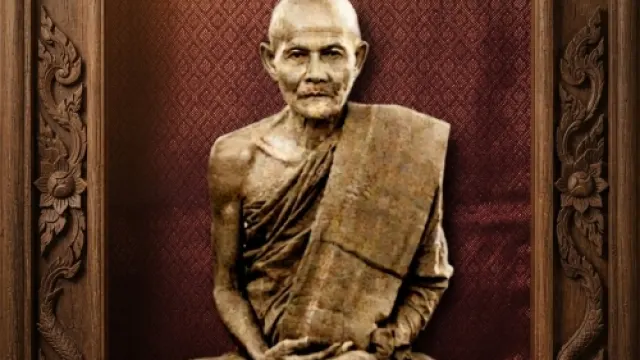
Ajahn Mun Bhuridatta Thera (พระอาจารย์มั่น ภูริทัตโต) is widely regarded as one of the greatest meditation masters in Thai Buddhist history and the principal founder of the modern Thai Forest Tradition. His life was devoted to rigorous meditation, strict adherence to the Vinaya (monastic discipline), and the direct realization of the Buddha's teachings through personal practice.
Although Ajahn Mun did not seek fame or material wealth, his profound spiritual attainment inspired generations of monks and lay practitioners throughout Thailand and beyond. Many of today's most respected meditation masters trace their lineage directly to his teachings, making his influence one of the most enduring in Theravāda Buddhism.
Early Life
Ajahn Mun was born on 20 January 1870 (B.E. 2413) in Ban Kham Bong, Ubon Ratchathani Province, northeastern Thailand. Born into a farming family, he learned the values of diligence, humility, and perseverance from an early age.
Like many Thai boys of his time, he entered the monastery as a novice to receive a traditional Buddhist education. His intelligence, discipline, and sincere interest in the Dhamma soon became apparent, leading him to pursue full ordination as a Buddhist monk.
Ordination and Spiritual Journey
After receiving higher ordination, Ajahn Mun became deeply interested in meditation and the teachings of the Buddha concerning liberation from suffering.
He trained under Ajahn Sao Kantasilo, another highly respected meditation master, who encouraged him to undertake intensive meditation practice in forests, mountains, and remote wilderness areas. This style of practice became the foundation of what is now known as the Thai Forest Tradition.
For decades, Ajahn Mun wandered across Thailand, Laos, and neighboring regions, living in caves, jungles, and isolated monasteries. These austere conditions allowed him to devote himself entirely to meditation while minimizing worldly distractions.
The Thai Forest Tradition
Ajahn Mun believed that the Buddha's path should be practiced as closely as possible to the original teachings.
His approach emphasized:
- Living in forests and secluded places
- Strict observance of monastic discipline (Vinaya)
- Daily meditation practice
- Mindfulness in every activity
- Simplicity and contentment
- Renunciation of material attachments
- Direct insight through personal experience
Rather than focusing on intellectual study alone, Ajahn Mun taught that genuine wisdom arises from disciplined meditation and the direct observation of the mind.
Today, monasteries following this tradition can be found throughout Thailand, Europe, North America, Australia, and many other parts of the world.
Meditation Teachings
Ajahn Mun encouraged practitioners to cultivate unwavering mindfulness and concentration while observing the true nature of body and mind.
His teachings focused on:
- Mindfulness (Sati)
- Concentration (Samādhi)
- Wisdom (Paññā)
- Impermanence (Anicca)
- Suffering (Dukkha)
- Non-self (Anattā)
- Compassion and loving-kindness
- Letting go of attachment
He emphasized that liberation cannot be achieved through belief alone but requires sincere practice, ethical conduct, and continuous self-examination.
Training Future Masters
One of Ajahn Mun's greatest contributions was the training of many monks who later became internationally respected meditation teachers.
Among his prominent disciples were:
- Ajahn Maha Bua Ñāṇasampanno
- Ajahn Chah Subhaddo
- Ajahn Thate Desaransi
- Ajahn Lee Dhammadharo
- Ajahn Khao Analayo
Through these disciples, Ajahn Mun's teachings spread across Thailand and eventually throughout the world.
Simplicity and Humility
Despite being regarded as a great meditation master, Ajahn Mun remained remarkably humble.
He avoided fame and preferred quiet forest monasteries over large temples or public recognition. His daily life reflected the Buddhist ideals of simplicity, discipline, and compassion.
Those who met him often described his calm presence, profound wisdom, and unwavering commitment to the Dhamma.
Influence on Modern Buddhism
Ajahn Mun's influence extends far beyond Thailand.
His teachings have inspired:
- Forest monasteries worldwide
- Thousands of monks
- Lay meditation practitioners
- International Buddhist communities
- Meditation centers across Europe, North America, and Australia
Many English-language books on Theravāda meditation are based directly or indirectly on the teachings transmitted through his disciples.
Today, the Thai Forest Tradition is considered one of the most respected meditation lineages in Theravāda Buddhism.
Sacred Amulets
Unlike many famous Thai monks, Ajahn Mun was not known for producing large numbers of sacred amulets.
However, commemorative amulets created by temples and disciples after his lifetime are highly respected among devotees and collectors. These amulets are valued primarily as reminders of his teachings, disciplined practice, and spiritual legacy rather than as objects of worldly gain.
Collectors seek authentic Ajahn Mun commemorative amulets for their historical significance and connection to one of Thailand's greatest meditation masters.
Passing
Ajahn Mun Bhuridatta Thera passed away peacefully on 11 November 1949 (B.E. 2492).
His passing marked the conclusion of a remarkable life dedicated entirely to preserving and practicing the Buddha's path.
His teachings, however, continue to guide countless practitioners seeking wisdom, inner peace, and liberation.
Legacy
Ajahn Mun's legacy remains one of the strongest foundations of modern Theravāda Buddhism.
His lasting contributions include:
- Reviving the ancient forest meditation tradition
- Establishing the modern Thai Forest Tradition
- Training generations of meditation masters
- Inspiring monasteries around the world
- Demonstrating the importance of direct meditation practice
- Preserving strict monastic discipline
His influence continues through the teachings of his disciples and the many monasteries that follow his example.
Conclusion
Ajahn Mun Bhuridatta Thera stands as one of the most influential Buddhist monks of the modern era. Through his unwavering dedication to meditation, simplicity, and strict monastic discipline, he revitalized the Thai Forest Tradition and inspired generations of practitioners worldwide.
His life reminds us that genuine spiritual progress comes through ethical conduct, mindful living, and diligent meditation. Whether studied by Buddhists, meditation practitioners, or those interested in Thai spiritual heritage, Ajahn Mun's teachings remain a timeless source of wisdom and inspiration.


Comments 0
No approved comments yet. Start the conversation.